
Pavers vs Concrete Patio: Which Is the Better Choice for Your Backyard?
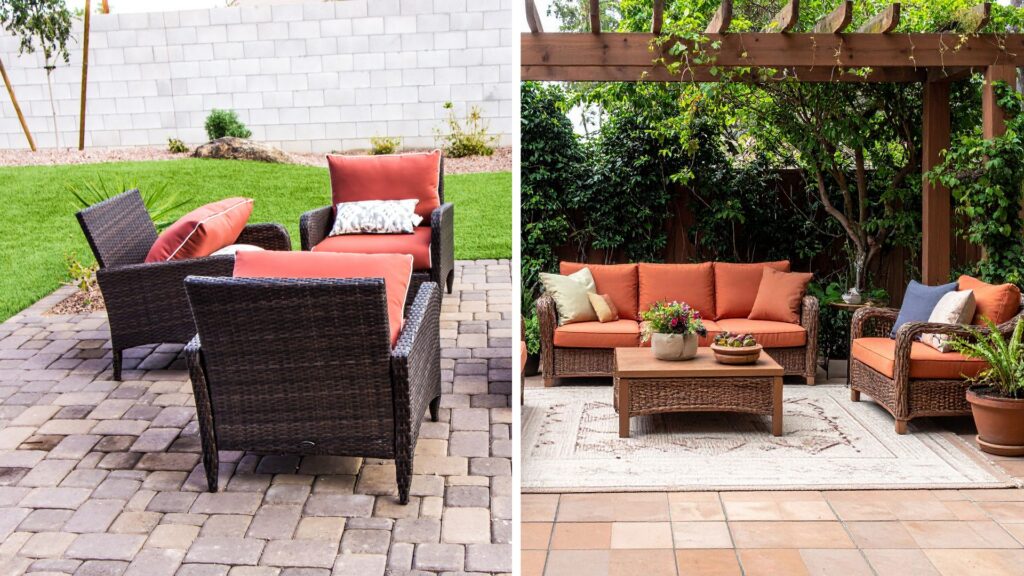
You’ve decided it’s time to upgrade your backyard. Maybe you want a clean surface for entertaining, a safer area for the kids to play, or just something that looks better than a patch of dying lawn. Whatever the reason, you’ve landed on two popular options: pavers or concrete.
Both can create a patio that looks great and holds up well over time. But they’re not the same, and choosing the wrong one for your space, budget, or lifestyle can cost you more in the long run. This guide to pavers vs concrete breaks down everything a homeowner needs to know before making that call.
What Are Pavers and How Do They Differ from Concrete?
Let’s start with the basics. Pavers are individual units – usually made from brick, natural stone, or concrete – that are set side by side over a prepared base of compacted sand or gravel.
Pavers are installed piece by piece, which gives them flexibility and a distinct visual character.
Concrete, on the other hand, is poured as a single continuous slab. Once it cures, you have a solid, seamless surface. Concrete is often finished plain, but it can also be stamped, stained, or textured to mimic stone or tile patterns.
Both approaches have real merit. The difference comes down to cost, durability, aesthetics, and how each handles the specific demands of your outdoor space.
Paver Patio vs Concrete Patio: A Cost Breakdown
Let’s talk money first, because for most homeowners, budget is a major factor.
Concrete is usually the more affordable starting point. Concrete costs can run anywhere from $6 to $12 per square foot for a basic installation, depending on thickness and finish.
Stamped or stained concrete adds to that price, sometimes pushing it to $18 or more per square foot for decorative work.
Pavers cost more initially. Installing pavers typically runs between $10 and $20 per square foot, and premium options like natural stone pavers or Techo-Bloc pavers can push that even higher.
So concrete is often cheaper than pavers when you’re looking at upfront costs alone.
But here’s where it gets more interesting. Over time, the cost of concrete can rise if repairs become necessary. A cracked concrete slab isn’t always a simple fix. Replacing or patching a concrete section often involves breaking out entire sections, which adds labor and material costs. Pavers, by contrast, allow you to swap out individual units without touching the rest of the surface.
So pavers cost more initially, but they may save you money down the road – especially in areas where soil movement or temperature swings put stress on hard surfaces.
Durability and Longevity: Which Holds Up Better?
This is where the paver vs concrete debate gets really practical.
How Concrete Handles Wear Over Time
Concrete is known for its strength. A well-poured concrete slab can last decades with minimal intervention. Concrete provides a solid, stable surface that handles heavy foot traffic, furniture weight, and even vehicle loads on a driveway.
The issue with concrete is cracking. Concrete is prone to cracking over time, especially when the ground beneath it shifts or when temperatures fluctuate dramatically. Traditional concrete expands and contracts with heat and cold, and without proper control joints, it tends to crack along unpredictable lines.
Standard concrete has no natural flex. Once a crack forms, water gets in, the damage spreads, and you’re looking at repairs. Cracked concrete isn’t just an eyesore – it’s a trip hazard and a sign that more damage may follow.
Stamped concrete looks beautiful, but the stamp patterns can fade or chip over time if the surface isn’t sealed regularly. Concrete, due to weathering and UV exposure, can look tired and stained within a few years. Concrete requires consistent maintenance to preserve both its appearance and structural integrity.
How Pavers Handle Wear Over Time
Pavers are made to flex. Because pavers are set individually with sand-filled joints between them, the surface can shift slightly without breaking. This makes pavers handle temperature changes and minor soil movement far better than a poured concrete slab.
Pavers are generally more resistant to frost weathering as well. In climates that see cold winters and rapid temperature changes, concrete may crack at the surface due to freeze-thaw cycles.
Pavers handle that stress differently because each piece moves independently rather than as one rigid mass.
Pavers also tend to outlast concrete surfaces when it comes to appearance. In contrast, concrete can look tired and stained within a few years due to weathering and UV exposure.
Pavers often age more gracefully – especially brick pavers and stone pavers, which develop character over time.
If a single paver gets damaged, you replace it. With damaged concrete, you’re often patching or pouring new sections, which rarely match the existing concrete perfectly.
Aesthetics and Design Flexibility
If you care about how your backyard looks – and most homeowners do – this section matters.
The Look of a Concrete Patio
Concrete provides a clean, smooth finish that works well with modern architecture and minimalism-inspired outdoor design. Poured concrete gives you a seamless surface that’s easy to accessorize with outdoor furniture, planters, and landscape features.
Stamped or stained concrete opens up more design options. You can replicate the look of cobblestone, wood, slate, or tile at a lower cost than using the real materials. Concrete surfaces can also be colored to match your home’s exterior or complement your landscape design.
The limitation is that once concrete is poured, you’re committed. You can seal it, stain it, or resurface it – but you can’t change the pattern without major work.
The Look of a Paver Patio
Pavers come in a wide range of shapes, colors, sizes, and textures. You can mix and match to create patterns that feel custom and intentional. Whether your home leans toward a traditional brick look or something more contemporary, there’s a paver style that fits.
Pavers allow for design elements that concrete can’t replicate on its own – curved borders, contrasting insets, or even incorporating planters and grass strips within the surface. This makes pavers a favorite among landscape designers who want more creative control.
Pavers provide a level of curb appeal that plain concrete often can’t match. Even compared to concrete, a well-designed paver patio simply looks more intentional and elevated.
Maintenance: What You’re Signing Up For
No outdoor surface is maintenance-free. Here’s what to expect from both.
- Concrete requires sealing every few years to protect against staining, moisture, and surface deterioration. If your patio develops a crack, you’ll need to address it quickly before water infiltrates and worsens the problem. In terms of repair complexity, concrete usually loses to pavers. Patching existing concrete is harder to do invisibly.
- Pavers need occasional attention too. The sand in the joints can wash out over time, allowing weeds to push through or pavers to shift slightly. You’ll want to refill joints periodically and apply a sealer if you want to preserve the color. Pavers also sometimes need re-leveling if one or two units settle.
That said, pavers are also easier to maintain over a long period. Individual repairs don’t require special skills or tools – you just lift the affected paver, adjust the sand base, and reset it. By comparison, concrete repairs usually require professional help.
Concrete and Pavers: When Each Makes More Sense
Rather than declaring one option the absolute winner, it’s more useful to match each option to the right scenario.
A concrete patio may be the better fit if:
- You have a tight budget for a new patio and want to maximize square footage
- You prefer a clean, minimal look that matches a modern home design
- You want a surface that requires less initial investment and that you plan to maintain consistently.
- The area has stable soil, and the climate is relatively mild
Choose pavers if:
- You want flexibility in design and the ability to update your outdoor space later
- You’re concerned about long-term durability and crack resistance
- You want the option to repair sections without redoing the entire patio
- You’re investing in your home’s value and curb appeal over the long term
Pavers would also be a better choice in areas where soil shifts are common or where tree roots may move over time – patios and concrete don’t mix well when roots begin pushing from below.
What About Concrete Pavers Specifically?
Concrete pavers are a middle-ground option worth mentioning. These are pavers made from poured concrete but shaped into individual units. They’re more affordable than natural stone pavers, more durable than a poured slab, and available in a wide variety of colors and finishes.
Concrete pavers are installed the same way as other pavers – on a sand or gravel base with joint sand between them. This gives them the flexibility and repairability of traditional pavers while keeping costs closer to standard concrete.
If you’re trying to balance budget with durability, concrete pavers are worth a serious look.
Frequently Asked Questions
Is a paver patio more expensive than a concrete patio?
Yes, pavers are more expensive upfront. Pavers typically cost more per square foot than a basic concrete pour. However, pavers often cost less over time due to easier repairs and longer lifespan.
Which is better for a hot climate?
Pavers handle heat and temperature fluctuations better. Concrete may develop surface cracks due to thermal expansion, while pavers distribute that stress across individual joints.
Can I install pavers over existing concrete?
In some cases, yes. Installing pavers over an existing concrete slab is possible if the slab is level and structurally sound. This is sometimes done to refresh an older surface without full demolition.
What about pavers and concrete for a driveway?
Both work for driveways. Pavers are also used in driveway applications and hold up well under vehicle weight. Concrete provides a more uniform surface, but pavers offer better long-term repairability.
Do pavers require a warranty?
Many paver manufacturers – including premium brands – offer a warranty on their products. Concrete installation warranties vary by contractor. Always ask about coverage before committing.
Conclusion
Both pavers and concrete can create a patio that adds real value, beauty, and function to your backyard. Concrete is more affordable upfront, while pavers offer long-term flexibility and design richness. The right choice depends on your budget, your home’s style, and how much maintenance you’re willing to do over the years. If you’re ready to move forward and want expert guidance, the team at Build Strong Construction and Remodeling is here to help. Call us at +1-972-802-3107 to get started.