Engineered Hardwood Pros And Cons: Is It Right For Your Home?
You’ve been staring at flooring samples for what feels like forever. Solid wood feels too expensive, laminate feels too cheap, and then someone mentions engineered wood, and suddenly, you have even more questions. Sound familiar?
If you’re trying to figure out whether engineered hardwood flooring is the right call for your home, you’re in the right place. Let’s break it all down in plain language so you can make a confident decision.
What Exactly Is Engineered Wood Flooring?
Engineered wood flooring is not the same thing as laminate or vinyl flooring. It’s a real wood product – just built differently than traditional solid hardwood.
Each engineered plank is made up of multiple layers. The core is typically constructed from plywood or fiberboard, and the top layer of real wood (called a veneer) sits on it. That wood veneer on top is genuine hardwood – often oak, hickory, or another popular species – so it looks and feels like a solid wood floor.
The key difference is what’s underneath. That layered ply construction is what makes it more stable and gives it better dimensional resistance to humidity and temperature changes compared to solid wood.
The Advantages of Engineered Wood Floors
It Looks Like Real Hardwood (Because It Is)
The top layer of real wood means you’re getting an authentic wood surface, not a photograph of wood printed on plastic as you’d find with LVP or laminate flooring. The grain, texture, and hardness are genuine.
If you want the look and solid feel of traditional wood floors without the full cost of solid hardwood flooring, engineered flooring is a smart middle ground.
It Offers Enhanced Stability
One of the biggest advantages of engineered wood over traditional solid hardwood is how it handles moisture and heat. Unlike solid planks that can warp or buckle under changing conditions, the cross-ply construction offers enhanced stability.
This makes engineered wood flooring a realistic option for areas where solid hardwood flooring would struggle – including over concrete slabs or in rooms with radiant floor heating. You can even install it in kitchens where spill risk is higher, though it’s still not ideal for bathrooms with heavy water exposure.
Easier to Install
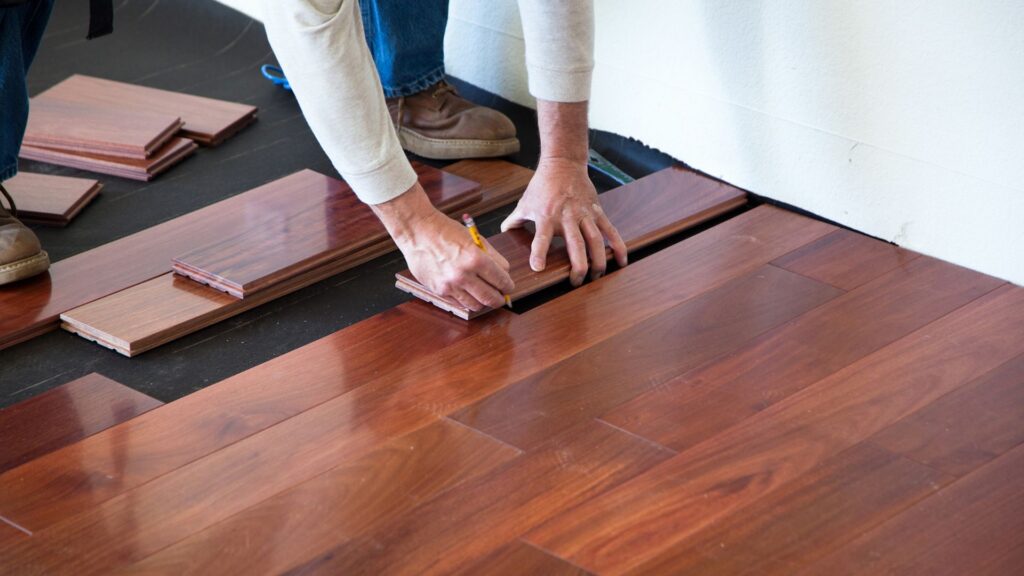
Engineered wood can be installed as a floating floor, glued down with adhesive, or nailed down.
That flexibility means it’s easier to install in more situations, including over existing subfloor materials. This can reduce labor costs compared to traditional solid hardwood installation.
More Budget-Friendly Than Solid Wood
You’re getting a premium flooring experience without the premium flooring price tag. Compared to solid wood, engineered wood floors typically cost less per square foot – both in materials and installation.
The Disadvantages of Engineered Wood Flooring
Now for the honest part. No type of flooring is perfect, and engineered wood has real drawbacks worth knowing about.
You Can Only Refinish It So Many Times
This is one of the most important cons of engineered hardwood flooring. The wear layer (the top layer of real wood) is only so thick – sometimes just 2mm to 5mm, depending on the product quality. That limits how many times it can be sanded and refinished.
With high-quality engineered planks, you might be able to refinish them two or three times.
Cheap engineered products may only allow one pass with a sander – or none at all. Traditional solid hardwood, by contrast, can be sanded and refinished multiple times over its lifespan.
Water Damage Is Still a Risk
While engineered wood flooring handles humidity better than solid wood floors, it’s not waterproof. A serious spill left to sit, or a slow leak under the floor, can still cause water damage.
You’ll want to mop up spills quickly and avoid using a soaking wet mop during routine cleaning.
A vacuum cleaner is usually the better daily option.
Not All Products Are Equal
This is a significant disadvantage worth calling out. The wood flooring market has a wide range of quality levels. Some engineered wood floors have a thick hardwood layer and perform beautifully for decades. Others have a paper-thin veneer on top and won’t hold up to real wear and tear.
The advantages and disadvantages of engineered wood flooring often come down to the specific product you choose. Spending a little more upfront usually pays off in the long run.
Limited Lifespan Compared to Solid Hardwood
When you look at hardwood vs engineered wood over the long haul, solid hardwood wins on raw lifespan – especially if it can be sanded and refinished multiple times. Engineered wood floors are durable, but they have a ceiling. Wooden floors made from solid wood can last a century with proper care. Most engineered wood floors top out at 25 to 30 years.
Is Engineered Wood Right for Your Home?
The pros and cons of engineered hardwood really come down to your priorities. If you want real wood floors at a more accessible price point, with good durability and flexibility in installation, it’s a strong choice.
If you’re planning a forever home and want floors you can sand and restore for generations, solid hardwood or even tile might be worth the extra investment, depending on the room.
For most home design goals in modern construction, engineered wood hits a practical sweet spot. It’s real wood, performs well, and is suitable for more installation situations than solid hardwood.
Conclusion
Choosing the right flooring for your home is a big decision, and it deserves careful thought.
Engineered wood floors deliver real wood beauty with practical performance – but like any flooring type, they come with trade-offs worth understanding before you buy. If you’re weighing your wood flooring options and want expert guidance, Build Strong Construction and Remodeling is here to help.
Our team works with Dallas homeowners every day to find the right fit for their space, style, and budget. Call us at +1-972-802-3107 or visit buildstronggroupremodeling.com to get started.