Impact-Resistant Shingles Shrug Off Hail Storms
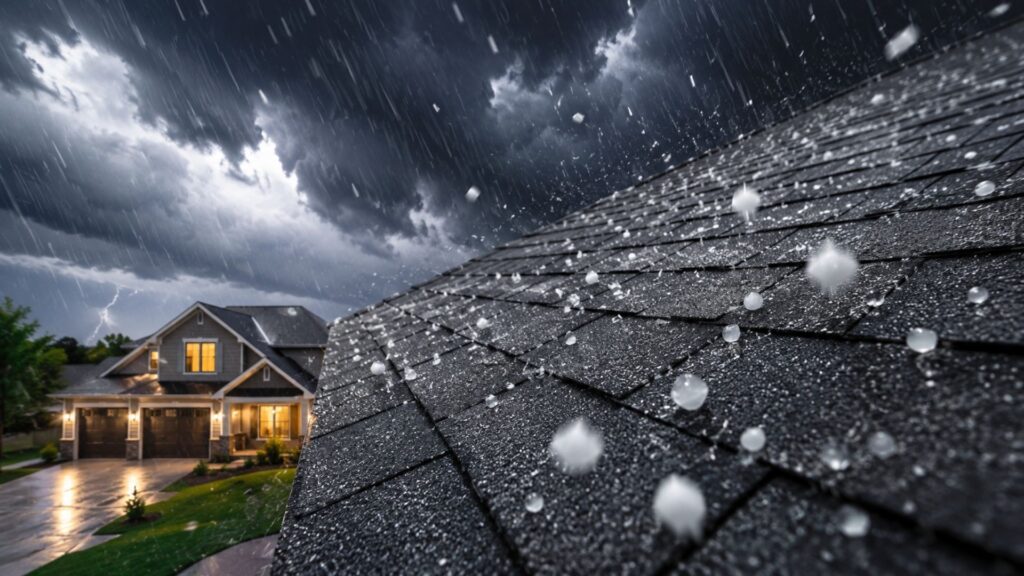
If you live in Dallas, Texas, you already know how unpredictable the weather can get. One afternoon it’s sunny, and the next you’re watching golf ball-sized hail pound your roof like a drum. For homeowners dealing with that kind of severe weather year after year, the question isn’t if your roof will take a hit – it’s how well it can take one.
That’s where impact-resistant shingles come in. They’re built specifically to absorb punishment from hail, wind, and flying debris without cracking, splitting, or leaving your home exposed to water damage. If you’ve been thinking about upgrading your roof, this is one decision worth understanding fully before you commit.
What Makes a Shingle “Impact-Resistant”?
Not all roof shingles are created equal. A standard asphalt shingle is designed to shed water and protect against everyday weather. An impact-resistant shingle, on the other hand, is engineered with toughness as its core feature.
Most of these shingles are made from modified asphalt concrete or bitumen combined with polymers, rubber, or fiberglass to create a flexible yet durable surface. That flexibility is what sets them apart. When hail strikes, instead of cracking on impact, the material absorbs and distributes the force across the shingle surface.
The UL 2218 Standard Explained
The most widely recognized benchmark for impact resistance comes from UL, a safety organization that tests products for performance and safety. Their UL 2218 test involves dropping steel balls from a set height onto a shingle and measuring the damage.
Shingles are rated on a scale from Class 1 to Class 4, with Class 4 being the highest level of impact resistance available. A Class 4 rating means the shingle survived a two-inch steel ball drop with no cracking or tearing – which roughly corresponds to large hail in a real storm.
The Insurance Institute for Business and Home Safety (IBHS) also conducts rigorous research and testing on domestic roof construction materials. Their findings have helped shape roofing standards across the United States, and their data consistently shows that Class 4 rated shingles outperform standard options in extreme weather conditions.
Why Dallas Homeowners Should Take Hail Seriously
Dallas sits in a region that gets hammered by hail storms regularly. Hail events here aren’t minor inconveniences – they can cause thousands of dollars in roof damage in a matter of minutes. A roof that isn’t built to handle that kind of beating will show it fast, with missing granules, cracked shingles, and eventually leaks.
Standard asphalt shingles can wear down after just one or two major hail events. Once the surface is compromised, water finds its way in, and what started as a roofing problem quickly becomes a structural one.
The Role of Insurance in Your Decision
Here’s something a lot of homeowners don’t realize: the type of shingle on your roof can directly affect your home insurance premium. Many insurance providers, including well-known names like State Farm, offer discounts to homeowners who install Class 4 impact resistant shingles.
Why? Because their own research shows those roofs generate fewer claims. A roof that holds up better in a storm means the insurance policy pays out less, and insurers pass some of that savings back to the homeowner.
Before you buy, it’s worth calling your insurance provider and asking whether a Class 4 upgrade qualifies you for a discount. In many cases, the savings on your insurance policy over several years can offset a significant portion of the installation cost.
Impact Resistant Shingles vs. Other Roofing Options
There are other roofing materials that offer strong impact resistance – metal roofs, for example, are extremely durable and can handle severe weather very well. A metal roof won’t crack under hail, and it comes with its own long-term benefits.
However, the cost of a metal roof is considerably higher upfront than asphalt shingle alternatives. Impact-resistant asphalt shingles offer a middle ground: they perform significantly better than standard shingles in hail storms, cost less than metal, and still qualify for many insurance discounts.
For homeowners who want meaningful protection without a dramatic jump in cost, Class 4 asphalt shingles often represent the smartest investment.
What to Expect During Installation
Installing impact-resistant shingles isn’t dramatically different from a standard roof replacement, but the materials and handling do require experienced hands. Polymer-modified shingles behave slightly differently than traditional asphalt, and proper installation – especially around valleys, ridges, and penetrations – matters a lot for long-term performance.
A qualified roofing contractor will assess your current roof decking, remove the old material, inspect for any underlying damage, and then install the new shingles using manufacturer-approved techniques. Getting this right the first time is what separates a roof that lasts 30 years from one that causes problems in five.
Frequently Asked Questions
Are impact-resistant shingles worth the extra cost?
Yes, especially in areas prone to hail and wind events. The combination of reduced repair costs, potential insurance savings, and longer roof lifespan makes them a smart long-term investment for most homeowners.
How do I know if my shingles are already impact resistant?
Check your home records or contact your previous roofing contractor. You can also look for the UL 2218 Class 4 label on the packaging or ask your insurance provider what rating your current roof carries.
Will impact-resistant shingles survive every hail storm?
No shingle is completely indestructible. However, Class 4 rated shingles, as proven through laboratory testing by organizations like UL and IBHS, perform significantly better than standard options under the same conditions.
Does the color or style of the shingle affect its impact rating?
Not directly. Impact resistance is about the material composition – the polymer content, the bitumen formulation, and the construction method – not the color or visual style.
Why Impact Resistant Shingles Make Sense for Dallas Homes
If your roof has seen better days or you’re planning a full replacement, impact-resistant shingles are one of the most practical upgrades you can make as a Dallas homeowner. They’re built for the kind of severe weather this area throws at you, and they come with real financial benefits through insurance savings.
To get started with a professional evaluation and quality installation, reach out to Build Strong Construction & Remodeling or call +1-972-802-3107 to schedule your consultation.