
Quartz vs Granite Countertops: One Scratches, One Doesn't
You’re standing in a showroom, staring at two beautiful slabs, and someone hands you a brochure that somehow makes things more confusing. Quartz or granite? Natural stone or engineered stone? Which one actually holds up in a real kitchen or bathroom?
Let’s cut through the noise and talk about what actually matters when you’re choosing a countertop for your home.
What’s the Actual Difference Between Quartz and Granite?
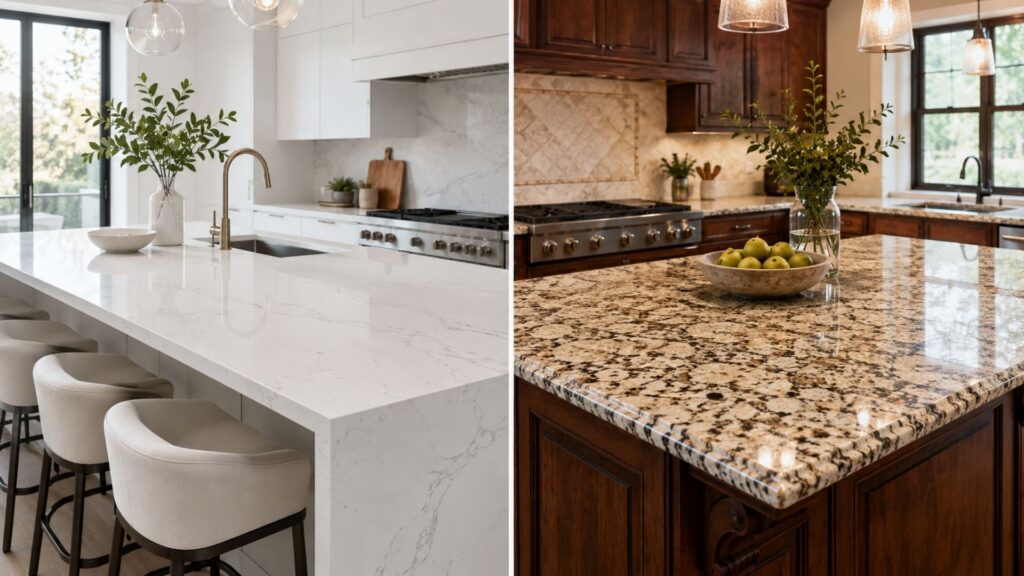
Granite is a natural rock (geology fans, you’ll appreciate this) pulled straight from the earth, cut into slabs, and polished. Every piece is one of a kind. The patterns, the veining, the color variation – all of it comes from nature. No two granite countertops are ever exactly alike.
Quartz countertops, on the other hand, are engineered stone. They’re made from ground quartz crystals mixed with resin and pigments, then compressed into slabs. Because humans control the process, quartz countertops can be made to look incredibly consistent – or even mimic the aesthetics of natural stone.
Both are beautiful. Both are popular in kitchens and bathrooms across Dallas. But they behave very differently under daily use.
So Which One Actually Scratches?
Here’s the honest answer: granite scratches, and quartz largely doesn’t.
Granite is a porous natural rock. While it’s hard, it can be scratched by sharp objects over time, especially if the sealer wears down. Speaking of which, granite requires periodic sealing to protect against stains and moisture. Without proper maintenance, it’s vulnerable.
Quartz, because of the resin binder used during manufacturing, creates a non-porous surface. That means it resists scratches better, doesn’t absorb liquids, and doesn’t need sealing. For busy kitchens where cookware and bakeware get dragged across counters on a regular basis, quartz countertops have a real edge.
Heat Resistance: Where Granite Wins Back Ground
If you’re someone who pulls a hot pan straight from the oven and sets it down on the counter, granite handles heat better.
Natural granite can withstand high temperatures without damage because it was literally formed under extreme heat deep in the earth. Quartz countertops, however, contain resin, and that resin can discolor or warp when exposed to sudden or intense heat. It’s not a dealbreaker, but it’s something to know.
The practical fix for quartz is simple: use a trivet. One extra step to protect a surface that wins in virtually every other maintenance category.
Aesthetics: Beauty Is in the Details
This one comes down to personal taste, but here’s how to think about it.
If you want something with natural variation, depth, and that unmistakable “pulled from the earth” beauty, granite is hard to beat. Various companies have long showcased how striking a natural slab can look in a finished kitchen.
If you want a cleaner, more uniform look – or you’re trying to match a specific design scheme – quartz countertops give you more control. Because they’re engineered stone, manufacturers can create consistent color patterns that work well in modern or minimalist spaces.
Neither is more beautiful objectively. They’re just beautiful in different ways.
Cost: What Should You Expect to Pay?
Cost is always part of the conversation, and here’s the honest breakdown.
Granite and quartz countertops sit in a similar price range, generally speaking. Granite can run cheaper at the entry level because there are many grades of natural stone. High-end granite slabs with rare patterns, however, can be expensive. Quartz countertops tend to be more consistent in cost because the manufacturing process is controlled.
Installation, edge profiles, and cutouts for sinks all affect final cost on both materials. The bigger cost consideration often isn’t the material itself – it’s whether you’re getting a proper installation that will last.
Which Countertop Is Better for Your Kitchen?
Here’s a quick way to decide:
- Choose quartz countertops if you want low maintenance, scratch resistance, and a non-porous surface that handles spills easily. Great for families, high-traffic kitchens, and modern designs.
- Choose granite if you love natural aesthetics, want heat resistance without worrying about trivets, and don’t mind the occasional resealing to keep things protected.
Both materials can absolutely work in a kitchen remodel or bathroom upgrade. It really comes down to how you cook, how much maintenance you’re willing to do, and the look you’re going for.
Conclusion
Quartz countertops and granite each bring real strengths to the table – one’s nearly indestructible against scratches, the other handles heat like a champ. The right choice depends on your lifestyle and the space you’re working with.
If you’re planning a kitchen upgrade in Dallas and want guidance on materials, layout, and installation, the team at Build Strong Construction & Remodeling is ready to help you make a decision you’ll feel good about for years. Explore our kitchen remodeling service to see how we can bring your vision to life.