Porcelain Vs Ceramic Tile For Shower: Which One Holds Up Better?
If you’re planning a bathroom upgrade and trying to decide between porcelain tile and ceramic tile for your shower, you’re not alone. It’s one of the most common questions homeowners face – and the answer isn’t always as simple as “one is better than the other.” Both have real strengths, and the right pick depends on how you plan to use the space.
Let’s break it down clearly so you can make a confident decision.
What Is the Difference Between Porcelain and Ceramic Tile?
Before you compare porcelain vs ceramic tile for your shower, it helps to understand what each one actually is.
Ceramic tile is made from a clay mixture that’s shaped and fired in a kiln at lower temperatures than porcelain. The result is a tile that’s generally lighter, easier to work with, and more affordable. Ceramic tile is sometimes finished with a ceramic glaze on the surface, which adds color, texture, and a layer of protection.
Porcelain is a type of ceramic tile, but it’s not the same thing. Porcelain tile is made from finer clay and fired at higher temperatures, which results in a tile that’s denser, harder, and far less porous. That density is what sets it apart.
Porcelain Tile vs Ceramic Tile: Durability Compared
When it comes to durability in a wet environment, porcelain is the better choice. Porcelain is more durable than ceramic because of how it’s made. The high-heat firing process creates a tile with much greater density, which makes it better at resisting moisture, cracks, and wear over time.
Ceramic tile is less dense than porcelain, which makes it a bit more porous. In a shower where water is hitting the walls and floors every single day, that difference in density matters.
Water Resistance and Water Absorption Rate
One of the most important factors when choosing tile in a shower is water resistance. Porcelain absorbs less water than ceramic – porcelain tile has a low water absorption rate of 0.5% or less, while ceramic can absorb significantly more.
In wet environments like a shower, higher water absorption means a greater risk of damage, mold, and deterioration behind the tile over time. This is why both glazed and unglazed porcelain tiles tend to outperform standard ceramic tile in bathrooms with constant moisture.
Shower Walls and Floors: Which Tile Works Where?
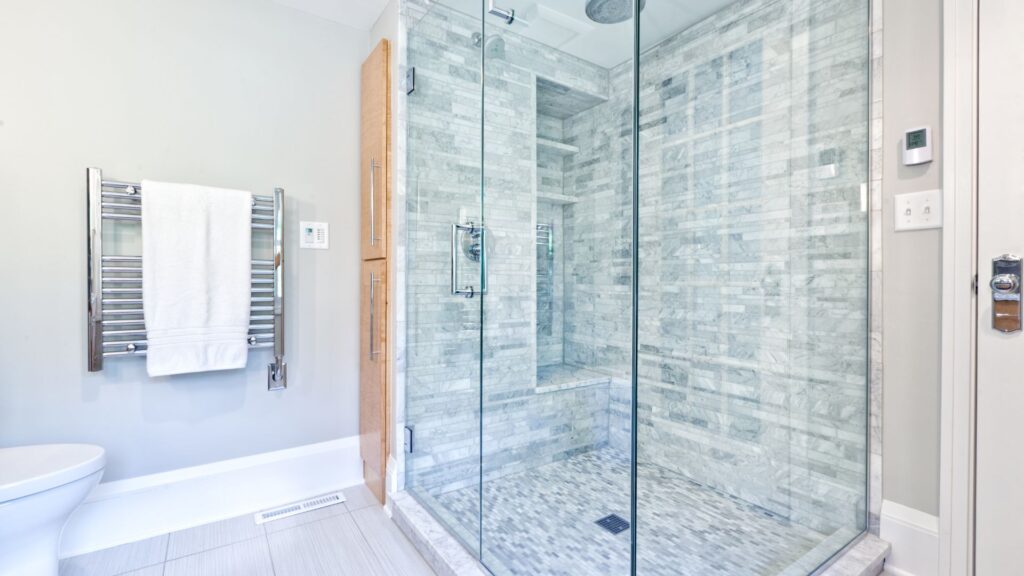
Porcelain tile offers excellent performance on both shower walls and floors. For shower floors specifically, you want something that won’t absorb standing water – and porcelain handles that well. It’s also available in mosaic formats and textured finishes that improve grip underfoot.
For the shower wall, ceramic tile is sometimes used as a more budget-friendly option, and it can work well there since walls don’t face the same foot traffic or water pooling that floors do.
Ceramic offers a wide variety of colors and styles, and its design flexibility makes it popular for bathroom walls and kitchen backsplashes.
That said, if you want consistency on both floors and walls and you’re planning for longevity, installing porcelain tile throughout is the smarter long-term move.
Is Ceramic Tile Ever the Better Option?
Ceramic tile is less expensive than porcelain, and that cost difference can be meaningful in larger projects. Ceramic tile is also easier to cut than porcelain, which can reduce labor time.
Because ceramic tile is less dense, it’s simpler to cut with standard tools. Installing porcelain often requires a specialized tile saw and professional installation for the cleanest results.
If you’re tiling bathroom walls in a lower-moisture area or want more affordable ceramic tile options for a guest bath, ceramic and porcelain both deserve consideration. But for a primary shower used daily, the durability advantage tilts toward porcelain.
Cost, Installation, and What to Expect
Porcelain tile is more expensive than ceramic – both in material cost and sometimes in labor, since it requires more specialized tools to cut and install. However, porcelain tile’s lifespan in high-traffic areas and high-moisture spaces often justifies the higher upfront cost.
Proper grout lines, waterproofing behind the tile, and professional installation all play a role in how long either tile type holds up. Even the best tile won’t perform well without the right installation process behind it.
If you’re working on a full bathroom remodel in the Dallas area, partnering with professional bathroom remodeling services ensures your tile is installed correctly from the start. You can also explore options with experienced flooring contractors or connect with a trusted interior remodeling contractor if you’re thinking bigger.
For those ready for a full renovation, Build Strong also offers a complete full-house remodel in Irving, TX.
FAQ: Porcelain and Ceramic Tile for Showers
Is porcelain tile the best choice for showers?
For most showers, yes. Porcelain tile is one of the most durable, moisture-resistant options available. Its low water absorption rate and density make it well-suited for wet, high-traffic areas like a primary bathroom shower.
Can I use ceramic tile in a shower?
You can, especially on the shower wall. However, ceramic tile is less suitable for high-moisture floor applications because it’s more porous than porcelain. If you choose ceramic for your shower, make sure it’s properly glazed and sealed.
What are the key differences between porcelain and ceramic tile?
The main differences between porcelain and ceramic tile come down to density, porosity, and durability. Porcelain is fired at higher temperatures using finer clay, making it denser and less porous. Ceramic is made from a broader clay mixture, fired at lower temperatures, and is generally easier to cut and install.
Is polished porcelain slippery in a shower?
Polished porcelain can be slippery when wet, so it’s not always ideal for shower floors. Textured or matte-finish porcelain is a better option for floors where slip resistance matters.
Does the type of ceramic tile matter for showers?
Yes. The type of ceramic tile you choose – whether it’s a standard glazed ceramic or a type of ceramic tile with added moisture resistance – will affect how it holds up. Always check moisture resistance ratings before selecting any tile for a shower.
Conclusion
When you compare porcelain vs ceramic tile for a shower, porcelain is the better choice for durability and moisture resistance – especially for shower floors and high-traffic daily use.
Ceramic tile is a solid, budget-friendly option for wall applications and lighter-use spaces. The best results always come from using quality materials with expert installation. If you’re planning a bathroom remodel in Dallas, Build Strong Construction and Remodeling is here to help you choose the right tile and get it done right. Call us at +1-972-802-3107 to get started.