Roof Underlayment Types: Pros, Cons, And How To Choose The Right One
When most homeowners think about their roof, they picture shingles. But underneath those asphalt shingles or metal panels, there is a layer that quietly does some of the heaviest lifting when it comes to protecting your home. That layer is the roof underlayment, and choosing the wrong type can lead to moisture damage, warranty issues, and expensive repairs down the road.
If you are planning a roof replacement or new construction and feel lost trying to figure out which underlayment makes the most sense, you are not alone. This guide breaks it all down in plain language so you can make a smarter, more informed decision.
What Is Roof Underlayment and Why Does It Matter?
Roof underlayment is a water-resistant or waterproof material installed directly on the roof deck – the plywood or structural surface beneath your roofing material. It sits between the deck and whatever outer layer your roof uses, whether that is asphalt shingles, a metal roof, or tile.
Think of it as a secondary defense system. If water gets past your shingles during a heavy storm or under the eaves during wind-driven rain, the underlayment is what keeps that moisture from soaking into your attic, insulation, and framing. It also plays a role in fire resistance, energy efficiency, and even ventilation performance, depending on the product you choose.
Building codes in Texas require underlayment in most roofing applications, so this is not an optional component. The question is which type is right for your specific roof and climate.
The Three Main Roof Underlayment Types
There are three primary categories of roof underlayment available today. Each is made from different materials, performs differently under stress, and comes with its own set of trade-offs.
Felt Underlayment (Asphalt-Saturated Felt)
Felt underlayment – often called tar paper – is the oldest and most widely used type in domestic roof construction. It is made from a base of either cellulose fibers or fiberglass, then saturated with bitumen or asphalt to create water resistance. The most common versions are 15-pound and 30-pound felt, referring to the approximate weight per square foot of material.
Pros of felt underlayment:
- It is the most affordable option, making it a cost-effective choice for budget-conscious projects
- Widely available and familiar to most roofers
- Works well under asphalt shingle applications
- Provides decent short-term water resistance during installation
Cons of felt underlayment:
- Susceptible to tearing, especially when wet or when workers walk on it during installation
- Can absorb moisture over time, reducing effectiveness
- Shorter lifespan compared to synthetic alternatives
- Heavier weight per roll, which makes installation more physically demanding
- Does not perform as well in high-UV or extreme weather conditions
Felt underlayment uses staple fasteners or roofing nails to secure it to the deck. It is a solid choice for straightforward asphalt shingle roofs, but it does have limitations on steep pitches or in areas that see heavy rainfall.
Synthetic Underlayment
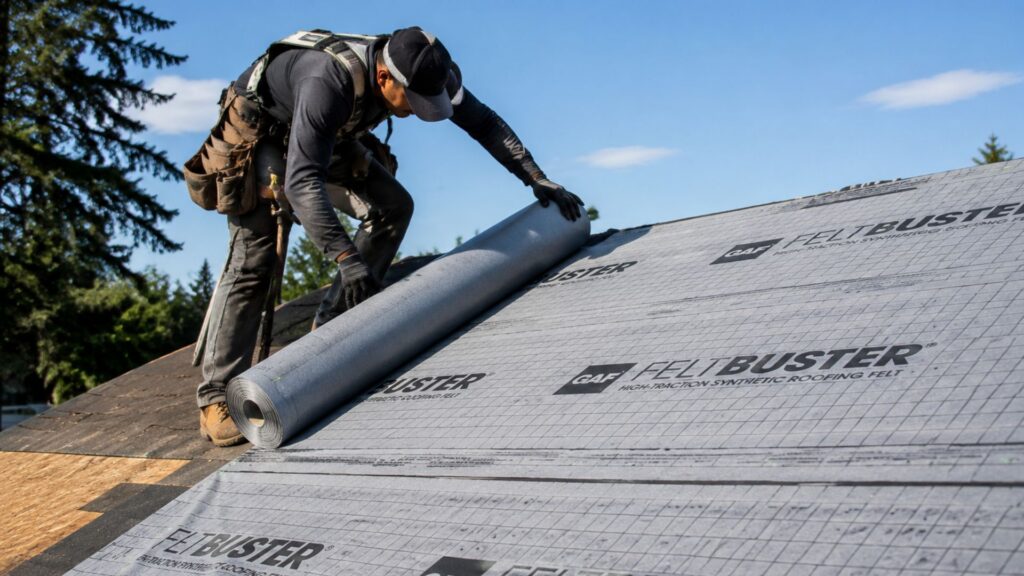
Synthetic underlayment has become the industry standard over the past decade. It is typically made from polypropylene or polyethylene – both polymer-based plastics – which makes it far more durable, lighter, and more resistant to tearing than traditional felt.
Pros of synthetic underlayment:
- Significantly stronger and more tear-resistant than felt
- Lightweight, which reduces fatigue during installation
- Better UV resistance, meaning it can be left exposed longer without degrading
- Provides excellent moisture protection
- Slip-resistant surface makes it safer for roofers to walk on
- Often comes with longer manufacturer warranties
- Compatible with a wide range of roofing materials, including metal roof systems and tile
Cons of synthetic underlayment:
- Higher upfront cost compared to felt
- Not all synthetic products are created equal – quality varies significantly by brand
- Some types do not allow moisture vapor to escape as effectively, which can affect attic ventilation if not paired correctly with a quality synthetic roofing system
Synthetic underlayment is secured using fasteners or adhesive strips, depending on the product.
Many premium versions include integrated waterproofing features and are considered a significant upgrade from felt for both residential and commercial applications.
Rubberized Asphalt Underlayment (Self-Adhering)
Rubberized asphalt underlayment – sometimes called peel-and-stick or self-adhering membrane – is the premium tier of underlayment products. It uses a rubberized asphalt compound with a polymer modifier, which makes it fully waterproof rather than simply water-resistant. Products like Sharkskin and similar brands fall into this category.
This type is particularly effective for use along eaves, valleys, and any area of the roof prone to ice damming or heavy water pooling. Bituminous waterproofing technology used in this category creates a true seal around fasteners, preventing water from wicking through nail holes.
Pros of rubberized asphalt underlayment:
- Fully waterproof – not just water-resistant
- Self-sealing around nails and staples
- Excellent performance in extreme weather conditions
- Works exceptionally well on low-slope roofs and around flashing points
- Provides superior protection against moisture infiltration in vulnerable areas
Cons of rubberized asphalt underlayment:
- The most expensive underlayment option by a wide margin
- Requires more careful installation – adhesive bonding to the deck means mistakes are hard to reverse
- Can trap moisture if installed over a damp surface
- Not always necessary for the entire roof – often used selectively in high-risk zones
In many Dallas-area installations, rubberized asphalt underlayment is used in specific zones – especially along the eaves and valleys – while synthetic underlayment covers the main field of the roof. This hybrid approach balances cost and performance effectively.
How to Choose the Right Underlayment for Your Roof
Choosing the right underlayment comes down to four key factors: your roofing material, your roof’s slope, your local climate, and your budget.
Consider Your Roofing Material
Not all underlayments are compatible with every roofing material. Asphalt shingles can work with felt or synthetic. Metal roof systems often require specific synthetic underlayments that can handle thermal expansion without wrinkling or tearing.
Clay tile typically needs a heavier synthetic or rubberized product to handle the added weight and moisture exposure. Always check what the manufacturer of your roofing material recommends, since using the wrong underlayment can void your warranty.
Factor In Your Roof’s Pitch and Vulnerable Areas
Low-slope roofs hold water longer, making rubberized asphalt the better choice in those areas.
Steeper pitches shed water faster and can perform well with a quality synthetic product.
Regardless of pitch, the eaves, valleys, and areas around penetrations like skylights and chimneys benefit from rubberized asphalt for added security.
Think About Dallas Weather Conditions
Dallas experiences heat, humidity, heavy spring storms, and occasional hail – all of which test your roofing system hard. Synthetic underlayments with high UV resistance and strong waterproofing properties tend to hold up better under these conditions than standard felt. For energy-conscious homeowners, some synthetic underlayments double as a radiant barrier, helping with efficient energy use by reducing heat transfer into the attic during those brutal Texas summers.
Match the Product to Your Budget
Felt is the cheapest. Synthetic sits in the middle. Rubberized asphalt is the most expensive. But cost should be weighed against longevity and protection. Spending a bit more upfront on a quality synthetic or hybrid approach can save significantly on future repairs, especially in a climate that demands a lot from your roofing system.
Common Mistakes to Avoid When Selecting Underlayment
One of the most frequent mistakes homeowners make is letting cost alone drive the decision.
Choosing the cheapest felt option on a complex roof with multiple valleys and penetrations is a gamble that often does not pay off.
Another mistake is ignoring the deck condition. If your plywood deck has soft spots, moisture damage, or rot, no underlayment in the world will fix the underlying problem. The deck needs to be solid before anything goes on top of it.
Finally, some homeowners try to skip underlayment entirely on re-roofing projects to cut costs.
This is typically a building code violation and leaves the roof dangerously exposed during the installation process and beyond.
Frequently Asked Questions
Is felt underlayment still worth using?
Felt is still a viable option for straightforward asphalt shingle roofs with a good pitch and no unusual exposure issues. It is not the best choice for metal roofs, low-slope applications, or areas with intense weather demands, but it remains a workable budget option when installed correctly.
Can underlayment act as a housewrap?
No. Housewrap is designed for walls and siding applications, while roof underlayment is specifically engineered to handle the slope, fastener patterns, and water exposure unique to a roof. They serve different purposes and should not be interchanged.
How long does roof underlayment last?
Felt underlayment typically lasts 15 to 25 years. Quality synthetic underlayments can last 25 to 50 years, depending on the product and installation. Rubberized asphalt products often carry manufacturer warranties of 25 years or more.
Does underlayment affect attic ventilation?
Some underlayments – particularly rubberized asphalt installed over the full deck – can restrict vapor movement. Proper attic ventilation should always be considered alongside underlayment selection to prevent moisture buildup inside the roof system.
Choose the Right Roof Underlayment for Lasting Protection
Roof underlayment is not the most glamorous part of a roofing project, but it is one of the most important decisions you will make. The right product protects your home from water damage, supports your roofing material’s warranty, and keeps your attic dry for decades. If you are ready to move forward with a roof replacement or new construction, connect with the team at Build Strong’s roofing contractor service to get expert guidance and a project that is built to last. You can also reach us directly at +1-972-802-3107 to schedule a consultation.