Heated Bathroom Floors Pros And Cons: Are They Worth It For Your Home?
You step out of the shower on a cold morning, and your feet land on freezing tile. It is a small misery, but a real one. That is exactly the problem heated bathroom floors are designed to solve, and they do it well. But are they actually worth the investment for your home?
Let us walk through the honest pros and cons so you can decide with confidence.
What Are Heated Bathroom Floors?
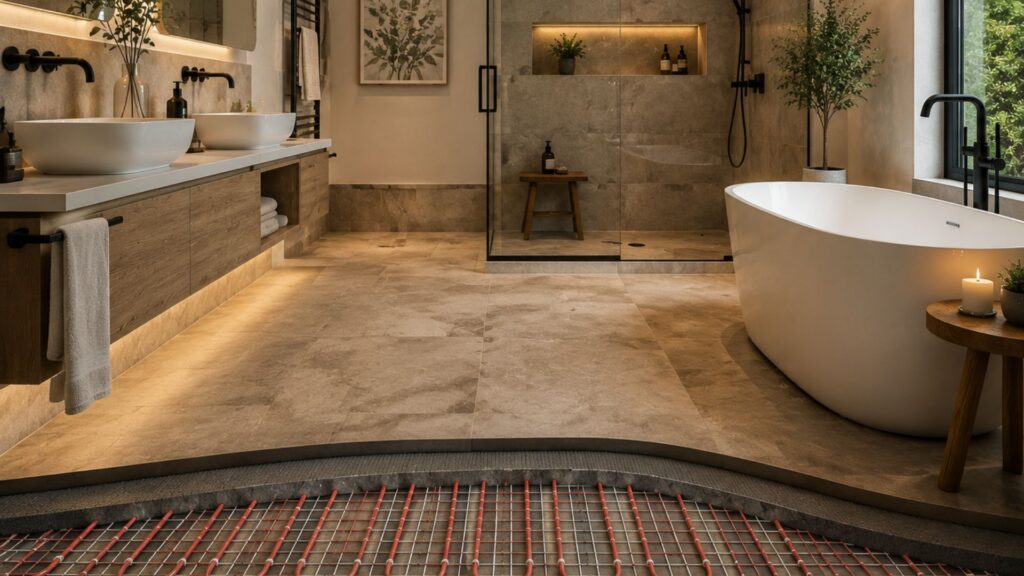
Heated bathroom floors use a system called radiant heating and cooling, which works by warming the floor surface directly rather than pushing hot air through vents like a traditional forced-air furnace. The heat rises naturally through the floor material using thermal radiation, keeping the entire room at a comfortable temperature from the ground up.
There are two main types of underfloor heating systems:
- Electric radiant systems use heating cables or mats installed beneath the flooring. They rely on electricity and are more common in bathroom remodels because they are easier to retrofit.
- Hydronic systems use warm water pumped through tubes beneath the floor. Hydronics are more efficient over time but involve more complex water heating infrastructure and higher upfront costs.
Both connect to a thermostat so you can control the temperature and even schedule when the heat turns on.
The Real Pros of Heated Bathroom Floors
Comfort That Feels Like a Luxury Upgrade
This is the obvious one. Warm floors transform a bathroom from a purely functional space into something that actually feels good to use. Stepping out of the shower onto a warm tile floor is a noticeably different experience, and many homeowners say it is one of the best remodeling decisions they never regret.
Efficient Energy Use Compared to Forced-Air Systems
Radiant systems work more efficiently than traditional heating, ventilation, and air conditioning setups in several ways. Because heat rises directly from the floor upward, the energy is not wasted circulating through ducts and losing temperature along the way. When paired with good building insulation, a radiant floor system can actually reduce your overall heating load.
According to reliable HVAC professionals, radiant floor systems can be 10 to 30 percent more energy-efficient than forced-air alternatives in properly insulated spaces. That kind of energy conservation adds up over time.
Compatible With the Best Bathroom Flooring Choices
Tile is the most popular flooring material for bathrooms, and it also happens to be one of the best conductors for underfloor heating. The floor absorbs and radiates heat evenly, which means you are not paying to heat a surface that fights the system. Other materials like stone and certain types of engineered flooring also work well, though wood flooring requires more careful planning to avoid warping from temperature changes.
Works as a Supplemental or Primary Heat Source
In a smaller bathroom, radiant floor heating can function as the primary heating system for the room, eliminating the need for additional wall heaters or vents. In larger spaces, it works beautifully as a supplement to a central system. Either way, it gives you precise temperature control room by room.
The Real Cons of Heated Bathroom Floors
Higher Upfront Cost
Installation costs vary, but electric radiant systems for a bathroom can run anywhere from $500 to $1,500 or more, depending on the size of the space and the complexity of the floor layout.
Hydronic systems cost significantly more due to the water heating components involved. This is a real barrier for homeowners on tighter budgets.
That said, for many homeowners, the operating cost over time is reasonable, especially with electric systems that use a programmable thermostat to run only when needed.
Installation Disrupts Existing Flooring
If you already have tile laid down, adding underfloor heating means removing that flooring first.
This is why heated floors are most cost-effective when planned as part of a broader bathroom remodeling project rather than as a standalone add-on. If you are already tearing up the floor for other reasons, the incremental cost of adding radiant heat drops considerably.
Not Ideal for Every Situation
Basement bathrooms can be tricky because the heat has to compete with cold concrete slabs.
Certain flooring types, particularly solid wood flooring, can crack or warp if the temperature is not carefully regulated. And in very large bathrooms, a hydronic system may be necessary to achieve even heating, which brings costs back up.
Slower Warm-Up Time
Unlike a baseboard heater or a forced-air furnace that can blast heat quickly, radiant floors take time to reach the desired temperature. Most systems need 30 to 60 minutes to fully warm a space. That is why a programmable thermostat is almost essential, so the floor is ready when you are.
Are Heated Bathroom Floors Worth It?
For most homeowners who are already planning a bathroom renovation, the answer is yes. The comfort improvement is real, the energy efficiency benefits are documented, and the long-term value it adds to the home is meaningful. If you are only focused on the lowest possible cost, it may not be your first priority. But if you care about comfort, efficiency, and making your home feel complete, it is a smart investment.
Real estate professionals consistently note that bathroom upgrades with radiant floor heating tend to appeal strongly to buyers and improve perceived home value.
Are Heated Bathroom Floors Worth It?
Heated bathroom floors are not just a luxury for high-end homes. They are a practical, energy-efficient upgrade that makes daily life more comfortable. The upfront cost is real, but so is the long-term value. If you are planning a bathroom remodel and want to do it right the first time, consider making radiant heat part of the plan. Reach out to the team at Build Strong’s bathroom remodeling service to explore what is possible for your home, or call +1-972-802-3107 to schedule a consultation.