
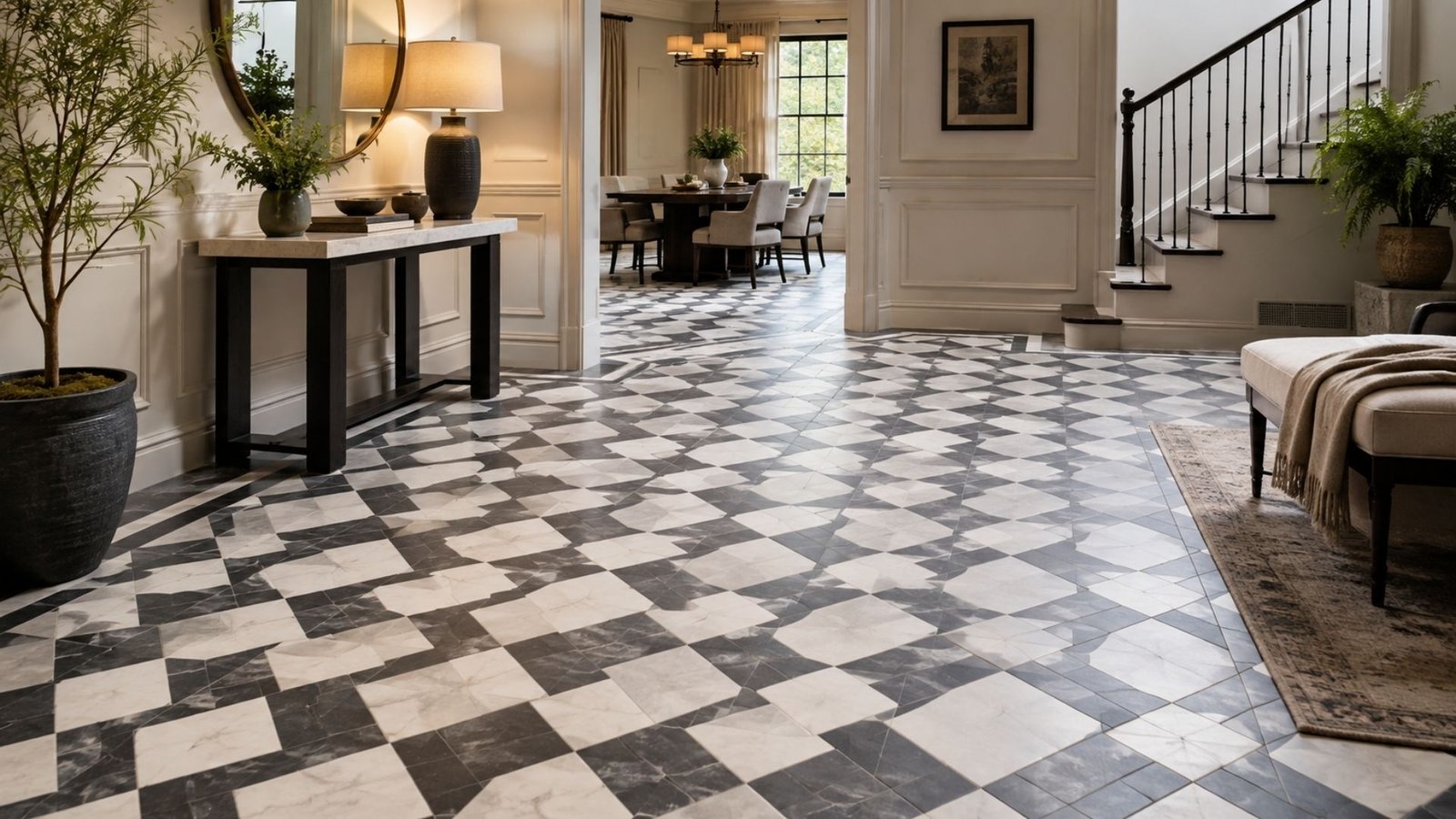
You don’t need to spend a fortune on expensive materials to get a floor that looks like it came out of a design magazine. The secret isn’t the tile itself – it’s the pattern. The right floor tile pattern can take an ordinary porcelain tile and make it look intentional, artisan, and completely custom.
This is one of the most underused tricks in home remodeling, and once you understand it, you’ll never look at a plain square tile the same way again.
Why Pattern Matters More Than Price
Most homeowners focus almost entirely on the cost per square foot of the tile. That’s understandable, but it misses the bigger picture. A mid-range porcelain tile laid in a herringbone pattern will outshine an expensive tile installed in a basic grid pattern every single time.
The pattern adds visual complexity, depth, and movement to a room. It changes how the eye travels across the space. It can make a narrow bathroom feel wider, a small kitchen feel larger, or a plain hallway feel like a deliberate design choice.
Classic Floor Tile Patterns Worth Knowing
The Herringbone Pattern
The herringbone pattern is one of the most recognizable in the world. Tiles are laid at 45-degree angles to form a V-shape that repeats across the floor. It borrows its visual rhythm from brickwork, which is part of why it feels so familiar and balanced.
It works especially well in bathrooms, kitchens, and entryways. When you use it with a contrasting grout color, the pattern pops even more.
The Chevron Pattern
The chevron pattern looks similar to herringbone at first glance, but there’s a key difference. In a chevron layout, the tiles are cut at an angle so the ends meet in a clean, continuous zigzag line. In herringbone, they overlap. Chevron feels more modern and crisp, while herringbone leans more vintage and textured.
Both work well with rectangular tile, wood-look porcelain, and even encaustic tile for a bold, artisanal look.
The Checkerboard and Diamond Patterns
The checkerboard pattern is timeless. Alternating two tile colors – often black and white – creates a bold visual grid that never goes out of style. It references classic vintage aesthetics and works beautifully in bathrooms and kitchens.
The diamond pattern is essentially the checkerboard rotated 45 degrees. Instead of square tiles set straight, they’re set on the diagonal, which creates a completely different feel – more dynamic, more expansive. A simple diamond layout can make a small room feel significantly larger.
Basketweave
The basketweave pattern mimics the over-under weaving of basket fibers using small rectangular tiles arranged around a central square. It’s a traditional pattern often associated with encaustic tile and vintage bathroom floors.
It’s detailed and handcrafted in appearance, which makes it feel closer to artisanal styles like Artisanal Talavera of Puebla and Tlaxcala or Talavera de la Reina tile work – even when you’re using budget porcelain.
How Grout Color Amplifies the Pattern
This is where a lot of DIY projects go sideways. People spend time choosing the right floor tile pattern and then default to the most neutral grout available. Grout color is half the design equation.
A matching grout color makes the pattern subtle and the tile itself the star. A contrasting grout color highlights every line of the pattern and makes even a cheap tile look like a deliberate artistic choice. Neither approach is wrong – it just depends on the aesthetic you’re going for.
Taking the Pattern Vertical: Wall and Backsplash Ideas
Floor tile patterns don’t have to stay on the floor. A herringbone pattern on a kitchen backsplash or a checkerboard design on a bathroom wall creates continuity and visual interest throughout the whole room.
Backsplash tiles are often where homeowners take their boldest risks, and that’s a smart move. Because the square footage is smaller, you can use a more intricate tile or pattern without a major cost increase. Tile backsplash designs in a diamond or basketweave layout can become the focal point of an entire kitchen.
When your floor pattern and your backsplash echo each other – even loosely – the room feels designed rather than assembled.
Which Pattern Works for Your Space?
The honest answer depends on the shape and size of your room, the style of your home, and how much visual complexity you want to live with every day.
- Narrow rooms benefit from diagonal layouts like diamond or herringbone, which draw the eye across the width.
- Small rooms open up with large-format tile set on a diagonal rather than a straight grid plan.
- High-traffic areas like kitchens and entryways benefit from patterns where the grout lines are minimal and easy to clean.
- Bathrooms are the best place to experiment with vintage-inspired patterns like basketweave or checkerboard.
Make Floor Tile Patterns Work for Your Space
A simple shift in how tile is laid can completely transform a floor from forgettable to impressive. The materials don’t have to change – just the thinking behind the layout. If you’re planning a bathroom or kitchen remodel and want to get the most out of your tile budget, working with an experienced flooring contractor makes a real difference.
Explore Build Strong Construction & Remodeling‘s flooring contractor service to see how the right installation approach can turn affordable tile into something that looks truly custom.