
Drainage Solutions for Sloped Yards That Redirect Water Effectively
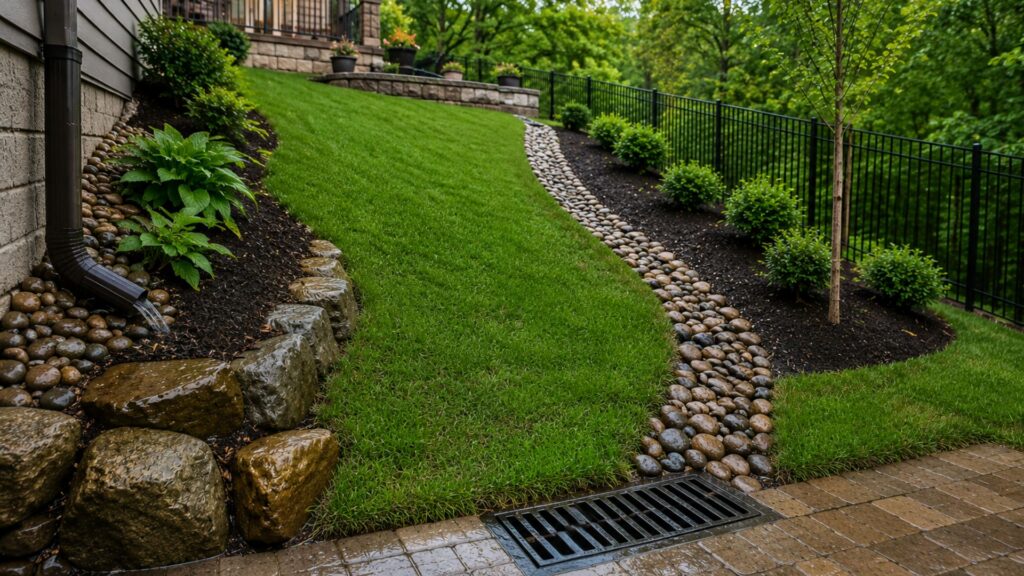
Water does what water wants. It flows downhill, pools in low spots, saturates your soil, and eventually finds its way into places you really do not want it, like your foundation, your crawlspace, or your neighbor’s yard. If your yard has a significant slope, you already know this problem firsthand.
The good news is that you do not have to fight gravity. You just have to work with it smarter.
Here is a straightforward look at drainage solutions for sloped yards that actually move water where it belongs – away from your home and into a controlled path that protects your landscape, your lawn, and your property value.
Why Sloped Yards Create Serious Drainage Headaches
When rain falls on a flat yard, it soaks into the topsoil gradually. On a sloped yard, gravity accelerates the whole process. Water picks up speed as it flows downhill, taking mulch, topsoil, and nutrients with it. That is called surface runoff, and it causes real damage over time.
Clay soil – common in the Dallas area – makes this worse. Clay does not absorb water quickly, so rain sits on top of it and runs off even faster. You end up with erosion on the slope, standing water at the bottom, and stressed grass that never quite recovers.
Left unchecked, this kind of stormwater problem can undermine a retaining wall, saturate a garden bed, damage hardscape surfaces, and even threaten your home’s foundation.
The Most Effective Drainage Solutions for Sloped Yards
French Drains: The Classic Solution That Still Works
- A French drain is a trench filled with gravel and a perforated pipe that captures water underground and channels it away from problem areas.
- The concept has been used since the 1800s – yes, named after Henry French, not the country of France – and it remains one of the most reliable drainage tools available.
- For sloped yards, a French drain installed along a contour line intercepts water before it reaches your home or pools at the base of your yard.
- The water enters the trench, flows through the gravel and pipe, and gets directed to a storm drain, a dry well, or another approved outlet.
- The key is proper installation.
- The trench has to be dug at the right depth and slope, and the pipe needs the right grade to keep water moving.
- Soil compaction around the drain can reduce its effectiveness, so this is not a casual do-it-yourself weekend project.
Trench Drains: Better for Hardscape Areas
- If the drainage problem is on a concrete surface – a driveway, a patio, or a pool deck – a trench drain is often a better fit than a French drain.
- A trench drain is a long, narrow channel with a grate on top that catches surface water and routes it away.
- For sloped yards with significant hardscape, trench drains protect both the surface and the soil beneath it.
- Water gets captured at the surface level before it can undercut the hardscape or cause erosion at the edges.
Retaining Walls With Built-In Drainage
- A retaining wall does more than hold soil in place.
- When built correctly, it also manages how water moves through your yard.
- Retaining walls without proper drainage behind them become liabilities – the hydrostatic pressure of saturated soil will eventually push the wall over.
- Good retaining wall construction includes a gravel backfill layer, a drainage pipe, and sometimes a weep hole system that allows water to pass through the wall in a controlled way rather than building up behind it.
- If you have a sloped yard and you are already thinking about a retaining wall, drainage planning should be part of the conversation from day one.
Rain Gardens: Where Function Meets Landscape Design
- A rain garden is a shallow depression planted with deep-rooted native plants that are designed to absorb and filter stormwater.
- It is not a pond – it should drain completely within 24 to 48 hours after rain.
- For sloped yards, a rain garden positioned at the base of the slope gives runoff somewhere purposeful to go.
- The plants help with aeration of the soil over time, which improves absorption. It also adds genuine visual appeal to your landscape, turning a drainage problem into a garden feature.
- This approach pairs well with a downspout extension from your rain gutter system, directing roof runoff into the garden rather than letting it saturate the lawn randomly.
Dry Wells and Rainwater Collection
- A dry well is a buried chamber that collects water from a downspout, a sump pump, or a French drain and allows it to slowly percolate into the surrounding soil.
- It is a good option when you need to manage concentrated water discharge in a specific spot.
- For larger properties or yards with significant roof area, a rainwater tank can capture runoff before it becomes a problem and give you usable water for irrigation in the process.
- In a dry climate like Dallas, that is a practical bonus.
Matching the Solution to Your Yard’s Actual Problem
Not every sloped yard needs the same fix. The right solution depends on soil classification, the degree of slope, how much impervious hardscape is present, and where water is currently going when it rains.
A yard with heavy clay soil and a steep slope needs a different approach than a yard with sandy loam and a gentle grade. Getting a professional eye on the problem before you dig a trench or plant a rain garden saves you from doing the wrong thing twice.
Best Drainage Solutions for Sloped Yards
Water on a sloped yard is not a battle you can win by ignoring it – but you can absolutely redirect it. Whether a French drain, a trench drain, a retaining wall, or a rain garden is the right fit depends on what your yard is actually doing when it rains.
If you are ready to stop watching water pool and damage your property, talk to the team at Build Strong Construction & Remodeling about our hardscape contractor services – we design drainage solutions that protect your home and improve your landscape for the long term. Call us at +1-972-802-3107.