
Curbless Showers Pros and Cons: Sleek Design, Real Maintenance Tradeoffs
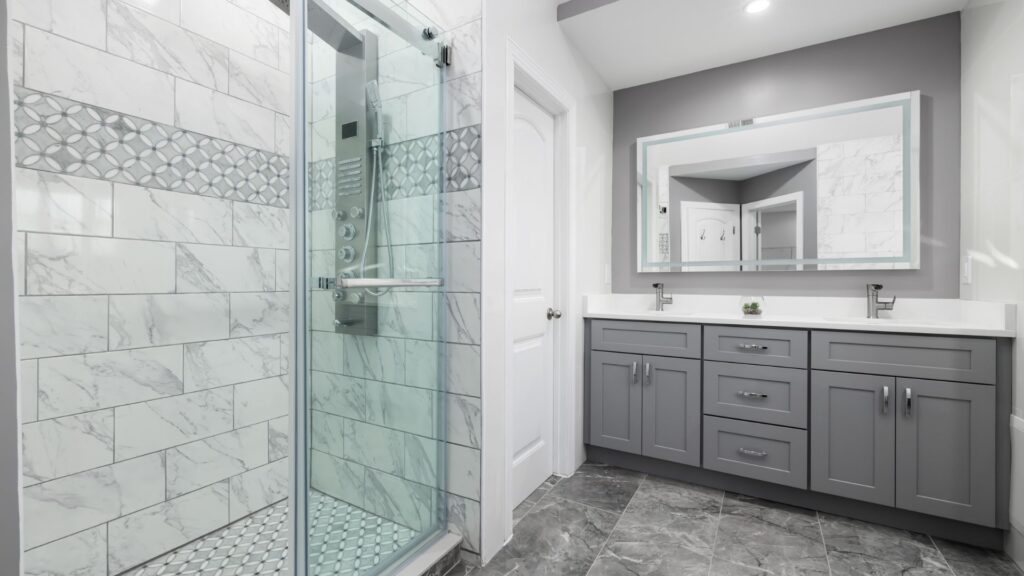
Walk into any modern bathroom renovation showcase, and you will likely spot one design feature that keeps showing up: the curbless shower. No raised threshold, no barrier, just a seamless transition from the rest of the floor straight into the shower space. It looks incredible.
But is it actually practical for everyday life in your house?
That is the question worth asking before you commit to tearing out your tub. Because while the aesthetics are hard to argue with, curbless showers come with real trade-offs that do not always make it into the glossy before-and-after photos.
What Exactly Is a Curbless Shower?
A curbless shower – sometimes called a zero-threshold or walk-in shower – is a shower design where the floor transitions directly into the shower area without a raised edge or tray. Instead of stepping over a curb to get in, you simply walk in. The floor slopes gently toward a drain to guide water away.
This type of shower has become closely associated with open plan bathroom layouts, where the goal is a continuous, uninterrupted visual flow. You will often see them paired with large-format tile, frameless glass panels, and wall-mounted fixtures to complete the look.
The Real Pros of Going Curbless
Accessibility That Actually Matters
This is probably the strongest argument for a curbless shower, and it is worth taking seriously.
The absence of a threshold makes the shower dramatically easier to use for people with limited mobility, seniors, and anyone recovering from surgery or injury. There is no step to navigate, no edge to trip over.
Accessibility in the bathroom is something most homeowners do not think about until they need it. A curbless shower is one of those features that adds long-term livability to a home, especially as families grow and change. If you have a child who is small, or an elderly parent living in the home, the safety benefit here is real.
A Cleaner, More Open Look
From a pure aesthetics standpoint, curbless showers win. They make any bathroom feel larger and more connected, even when the actual square footage has not changed. The floor reads as one continuous surface, which is visually calming and modern.
When paired with large tile formats and frameless glass, the effect is especially striking. It is the kind of design choice that makes a bathroom feel less like a utility room and more like a thoughtful space in your home – somewhere between the bedroom and a private retreat.
Easier to Clean (Mostly)
Without a curb to scrub around, cleaning the shower floor becomes simpler. There is no grout line where the threshold meets the floor to collect mold and soap scum. The transition is smooth, and the tile runs continuously, which reduces the number of tricky corners and edges to maintain.
The Real Cons You Should Not Ignore
Water Containment Is a Genuine Challenge
Here is where things get complicated. Without a curb to contain the water, the entire waterproofing system underneath the floor has to work harder. If the slope is not precisely calculated, or if the waterproofing membrane is improperly installed, water migrates beyond the shower area and into the rest of your bathroom floor.
This is not a minor inconvenience. Over time, water that escapes the shower zone can seep beneath tile, damage the subfloor, and create conditions for mold and structural deterioration.
Products like Schluter systems have become popular in professional construction because they offer reliable waterproofing and drainage solutions specifically designed for curbless applications. But they have to be installed correctly.
The Drainage Has to Be Exactly Right
Slope matters more in a curbless shower than in any other bathroom design. The floor must pitch at the correct angle – typically around a quarter inch per foot – toward the drain to keep water moving in the right direction. If that slope is off even slightly, you end up with pooling water and a wet floor outside the shower.
Linear drains are often used in curbless designs because they allow for a single-direction slope rather than a four-way pitch toward a center drain. They also look cleaner. But they add cost and require careful placement during the renovation.
Your Bathroom Gets Wet
This one sounds obvious, but it catches a lot of homeowners off guard. In a traditional shower with a curb and a door, water stays relatively contained. In a curbless shower – especially one with a large open entry rather than a glass panel – spray and steam travel freely into the room.
Your bathroom floor, wall surfaces, and even nearby fixtures will get wet consistently. If your bathroom is connected to a bedroom, or if you are working with limited space, this can be a real daily nuisance. Ventilation becomes more important, and the materials you choose for the rest of the bathroom need to be able to handle regular moisture exposure.
Installation Costs Are Higher
Curbless showers require more skilled labor and careful planning than standard shower builds.
The floor must be properly sloped during the construction phase – often requiring a mortar bed or a custom floor system. Waterproofing needs to extend further than it would in a curbed design. And if you are working in an existing bathroom rather than a new build, the subfloor may need to be modified or reinforced.
This is not a project that benefits from cutting corners. The cost difference between a properly built curbless shower and a poorly installed one is not apparent on day one, but it becomes very clear within a year or two when water damage starts showing up.
Is a Curbless Shower Right for Your Home?
When It Makes a Lot of Sense
- If accessibility is a priority – for yourself now or for the future – a curbless shower is one of the smartest investments you can make in a bathroom renovation.
- It also makes strong sense in larger bathrooms where the open plan aesthetic can be fully realized without sacrificing function.
- Homeowners who are doing a full bathroom remodel from scratch, rather than retrofitting an existing space, will find the process much more straightforward.
Starting with a fresh construction gives your contractor the flexibility to slope the floor correctly and install waterproofing from the ground up.
When You Should Think Twice
In smaller bathrooms, a curbless shower without adequate glass enclosure can turn the entire room into a splash zone. If your bathroom connects directly to a bedroom or a room with flooring that cannot handle moisture, think carefully about your design before committing.
Also consider your household. If you have young children who take baths, or if the primary use of the shower involves a lot of movement and spray, the containment challenge becomes more significant.
Frequently Asked Questions
Are curbless showers harder to waterproof than standard showers?
Yes, they require a more extensive waterproofing system because water has no physical barrier to keep it contained. The membrane must extend further across the floor, and the slope must be precise to keep water moving toward the drain.
Do curbless showers make a bathroom feel larger?
They can, especially when paired with large-format tile and frameless glass. The continuous floor surface creates a visual flow that makes the space feel more open, even if the actual dimensions have not changed.
What is the best drain type for a curbless shower?
Linear drains are commonly preferred because they allow for a cleaner single-direction slope. They also pair well with larger tile formats since the grout lines can align with the drain channel.
Can any bathroom be converted to a curbless shower?
Not always without modification. The subfloor may need to be lowered or rebuilt to allow for proper slope and waterproofing. A professional assessment during the planning phase of your renovation will clarify what is and is not feasible.
What to Know Before Choosing a Curbless Shower
A curbless shower can genuinely elevate a bathroom – cleaner lines, better accessibility, and a design that holds up over time when built correctly. But “built correctly” is the key phrase.
Waterproofing, slope, and drainage are not details you can revisit after the tile is down. If you are planning a bathroom renovation in the Dallas area and want honest guidance on whether a curbless shower makes sense for your specific space, reach out to the team at Build Strong Construction & Remodeling through our bathroom remodeling page or call +1-972-802-3107.